
The Danger of a single story: Why Balance Matters In African Storytelling
If there is one speech that has stayed with me long after I first encountered it, it is Chimamanda Ngozi Adichie’s TED Talk, The Danger of a Single Story. It should be required viewing for anyone working in media, journalism, or communications.
In it, Adichie issues a simple but powerful warning: when we hear only one story about a person or a place, we risk misunderstanding them entirely.
Adichie illustrates this idea through a personal anecdote about Fide, the house help who worked for her family when she was a child. From her mother, Chimamanda had learned a single story about Fide’s family: that they were desperately poor.
Her mother would often remind her to finish her food by saying, “Don’t you know people like Fide’s family don’t have food?” That repeated narrative shaped Chimamanda’s perception of Fide, filling her with pity rather than understanding.
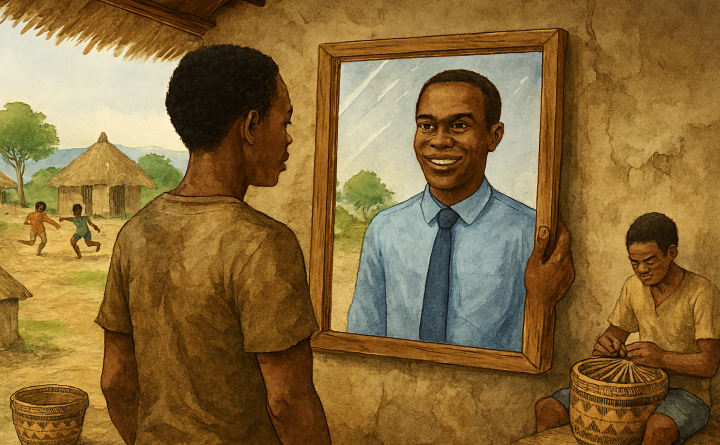
That perception changed when she later visited Fide’s family in their rural home. There, she encountered a beautifully patterned basket made of dyed raffia, crafted by Fide’s brother.
In that moment, the single story of poverty was disrupted. Yes, Fide’s family was poor but poverty was not the sum total of who they were. They were also skilled, creative, and dignified. The problem was not that the story of poverty was untrue, but that it was incomplete.
Adichie expands this argument beyond her personal experience to the way Africa is often portrayed in Western literature and media. Too frequently, Africa is framed as a continent defined by war, disease, corruption, and despair. These narratives flatten a complex reality and rob Africa of its full identity.
Africa is also a continent of rich cuisines, breathtaking landscapes, unparalleled wildlife, vast mineral wealth, innovation, resilience, and deeply rooted cultural traditions. When only catastrophe is told, humanity is erased.
The central lesson from Adichie’s speech is the importance of balance in storytelling. In journalism, this principle is often captured in the idea of the right of reply, the understanding that every story deserves multiple perspectives. As I was taught in journalism school, there are always three sides to a story: your side, my side, and the truth.
One cannot help but ask: what if Fide had been given the chance to tell his own story earlier? What if his skills, aspirations, and family life had been part of the narrative from the beginning? And on a larger scale, what if those who write about Africa took the time to live here, listen to its people, and understand its contradictions before defining it for the world? Would the story remain the same?
As communications professionals particularly those of us working in the humanitarian sector, we carry a profound responsibility. We are not merely conveyors of information; we are shapers of narratives.
Our duty is to tell stories in their natural state: truthful, contextual, and complete. This means resisting the temptation to sensationalize suffering while ignoring strength, agency, and progress.
When the stories we amplify about Africa focus solely on war, tribalism, hunger, and disease, while overlooking innovation, community, and resilience, we contribute to a narrative that discourages investment, partnership, and respect. We inadvertently teach the world to see Africa as a problem to be managed rather than a partner to be engaged.
Adichie’s speech has become a guiding principle in my work as a communications officer in the humanitarian field. I often encounter individuals and communities living in extremely difficult circumstances. Yet, when I tell their stories whether through words or images, I strive to present them not as passive victims, but as people with determination, agency, and hope.
I focus on their efforts to improve their lives: embracing agribusiness, acquiring new skills, pursuing education, and building pathways out of poverty.
This approach does not deny hardship; it contextualizes it. It acknowledges suffering while affirming dignity. It recognizes that even in the most challenging conditions, the good often outweighs the bad.
Adichie captures this philosophy best in her own words: “Stories matter. Many stories matter. Stories have been used to dispossess and malign, but stories can also be used to empower and humanize.” For those of us entrusted with telling the stories of people and places, the challenge and the obligation is clear: tell many stories, and tell them well.